
Keeping Clients Engaged with Automation: The Psychology, the Playbook, and the Payoff
Most clients don’t fall away because you’re a poor coach—they drift because modern life interrupts good intentions. Automation isn’t about replacing human connection—it’s about protecting it: nudges that arrive at the right moment, plans that feel personal, and follow-ups that remove friction.
Done well, automation keeps clients motivated between sessions and makes repeat business the default.
The Psychology of Automated Motivation
Self-Determination Theory (SDT)
People stick with behaviours when they feel autonomy (I choose this), competence (I can do this), and relatedness (I belong here).
Automation supports SDT when it gives choice, tracks and reflects progress, and builds belonging through personalised touchpoints.
Habits and Context Cues
Most clients don’t need more willpower; they need reliable cues. Real-world data suggest habit automaticity takes roughly 66 days on average (range 18–254).
Automation provides the timely cues that help routines stick.
Implementation Intentions
Pre-commitment (“if-then” plans) is a proven psychological technique: “If it’s Mon/Wed/Fri at 7am, then I’ll start the 20‑minute strength plan.”
Automation can deliver micro-prompts that make these plans real.
Low-Friction, High-Frequency Nudges
Studies show daily or near-daily nudges increase activity more than vague monthly reminders.
The best nudges are behaviour-linked and personalised.
Illustrative Results
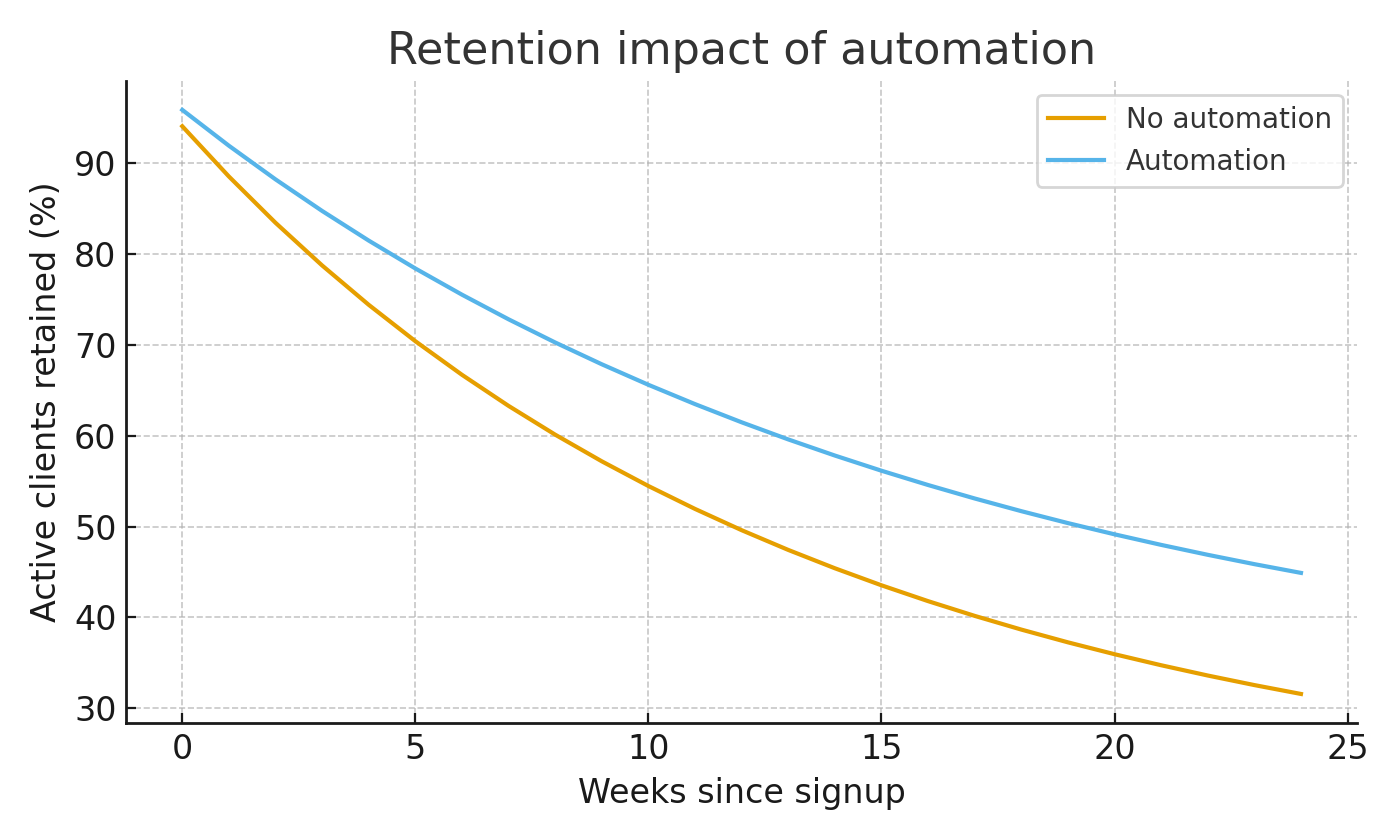
Automation typically slows early churn, leading to higher client counts after 12–24 weeks—critical months for building loyalty.
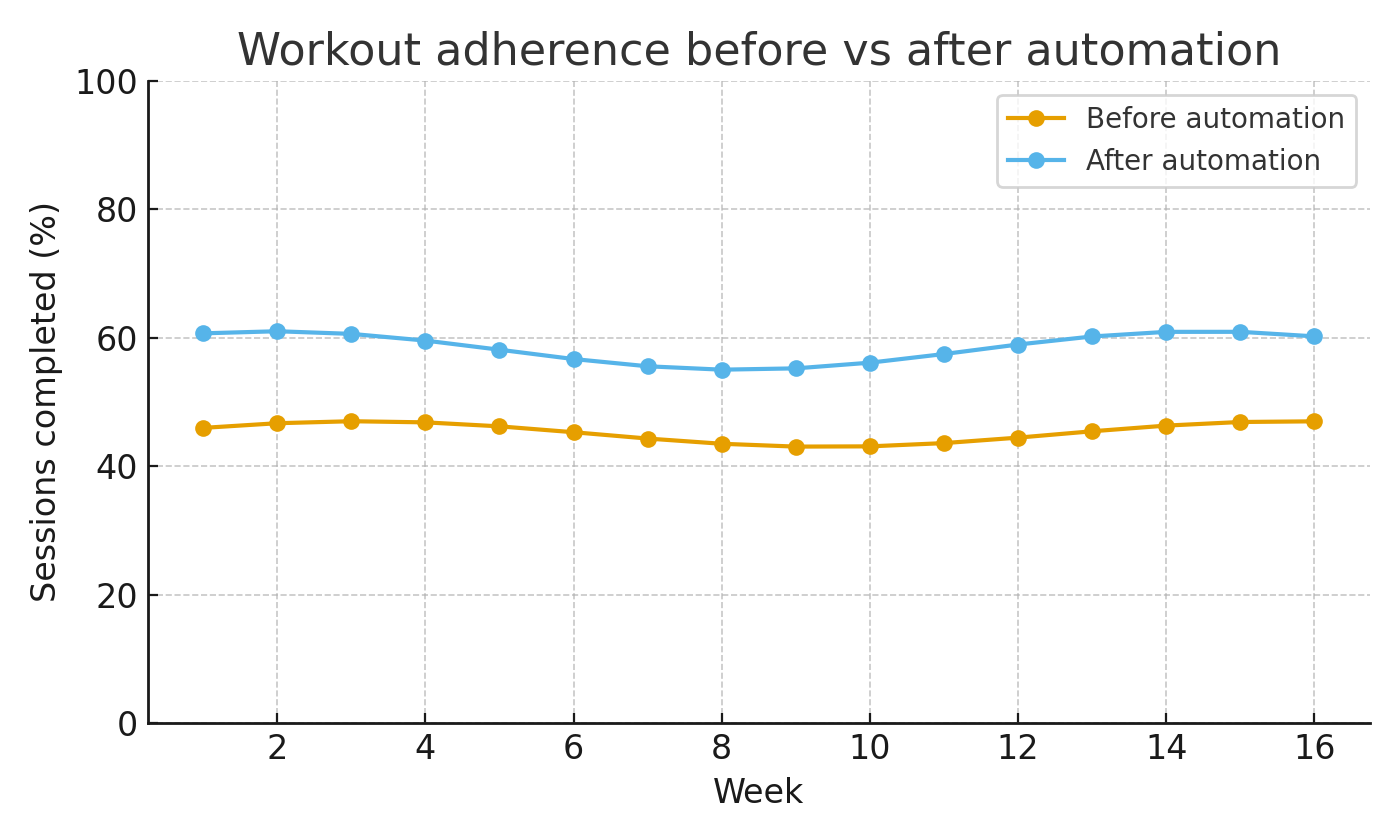
Trainers often see 8–15 percentage point improvements in workout adherence once automation and reminders go live.
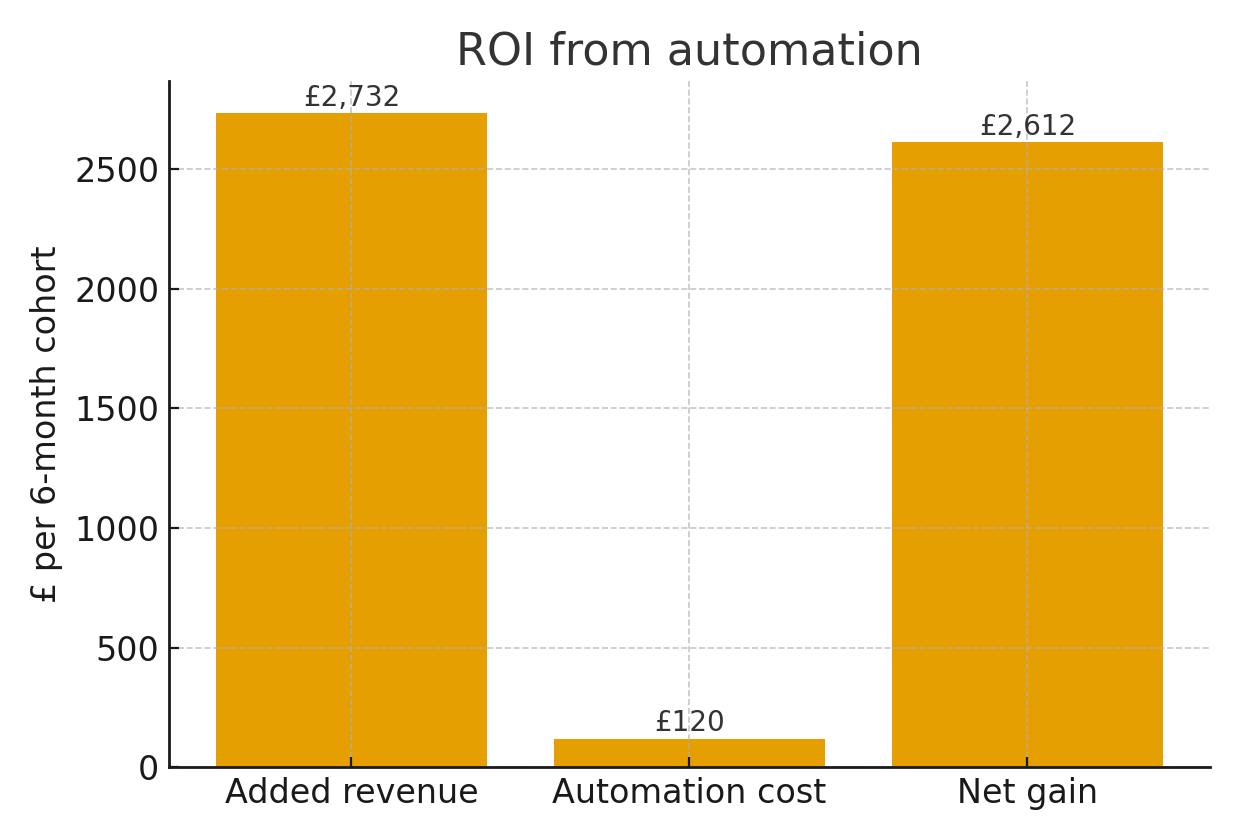
Even modest automation can yield a positive net revenue impact for a 100-client cohort within six months.
What to Automate – and How ClientSlot Helps
- Session prompts & streak protection: ClientSlot can automatically detect no-shows or unbooked periods and send push notifications, and email reminders to help clients keep their streak alive.
- Trainers can customise the tone and timing to make it encouraging rather than intrusive.
- Micro-progress feedback: Weekly progress summaries can be auto-generated from booking data and attendance history.
- ClientSlot highlights session counts, completion rates, and suggests next steps or new challenges.
- Choice architecture: Within the dashboard, trainers can publish multiple workout or class options for the same day.
- Clients receive a friendly prompt to pick which one fits their schedule, preserving autonomy and reducing decision friction.
- If-then planning: After each session, ClientSlot can prompt clients to choose their next session time and confirm it with a single tap, adding it to their calendar.
- Automated reminders then nudge them as that time approaches.
- Social proof & belonging: Trainers can set up weekly “community wins” messages where ClientSlot highlights group milestones (e.g., 100 total classes completed this month) and encourages group participation.
- Win-back sequences: ClientSlot supports graduated reactivation campaigns. If a client misses 7, 14, or 28 days, the system can automatically send progressively stronger offers—quick-win workouts, discounted drop-ins, or personalised messages to re-engage them.
Quick Setup Checklist
- Map client journey: onboarding → habit-building → maintenance → lapse. and use the messaging within ClientSlot to directly communicate
- Define events that trigger nudges (missed session, PB, streak risk).
- Write 5 core message templates per event—short and specific.
- Offer a fallback workout in every message.
- Send weekly progress summaries with at least one personalised recommendation, if you're stuck, use ClientSlot's Ai brainstorming feature to help.
- Implement win back nudges and track client responses, following up where there's perceived interest..
The Business Case
Retention compounds revenue: keeping a client one more month is often cheaper than finding a new one. You know the work you've put in to growing your client base, nurture it.
Automation can help scale your 1‑to‑1 feel while letting you stay focused on coaching. With the right setup, every client feels seen and every month adds predictable revenue.
Sources & Further Reading
- Deci, E. & Ryan, R. (2000). Self-Determination Theory and the Facilitation of Intrinsic Motivation, Social Development, and Well-Being.
Key finding: Satisfying autonomy, competence, and relatedness boosts persistence and internal motivation.
- Lally, P. et al. (2010). How are habits formed: Modelling habit formation in the real world.
Key finding: Habit automaticity averages ~66 days; early repetition is crucial for routine formation.
- Milkman, K. et al. (2021). A Mega-Study of Text-Based Nudges Encouraging Patients to Get Vaccinated.
Key finding: Personalised, timely messages significantly increased behaviour follow-through at scale.
- Gollwitzer, P. (1999). Implementation intentions: Strong effects of simple plans.
Key finding: “If-then” plans create automaticity in response to cues and improve task completion.
- Meta-analyses on digital nudging and physical activity adherence.
Key finding: Digital nudging interventions improve physical activity adherence and health outcomes.